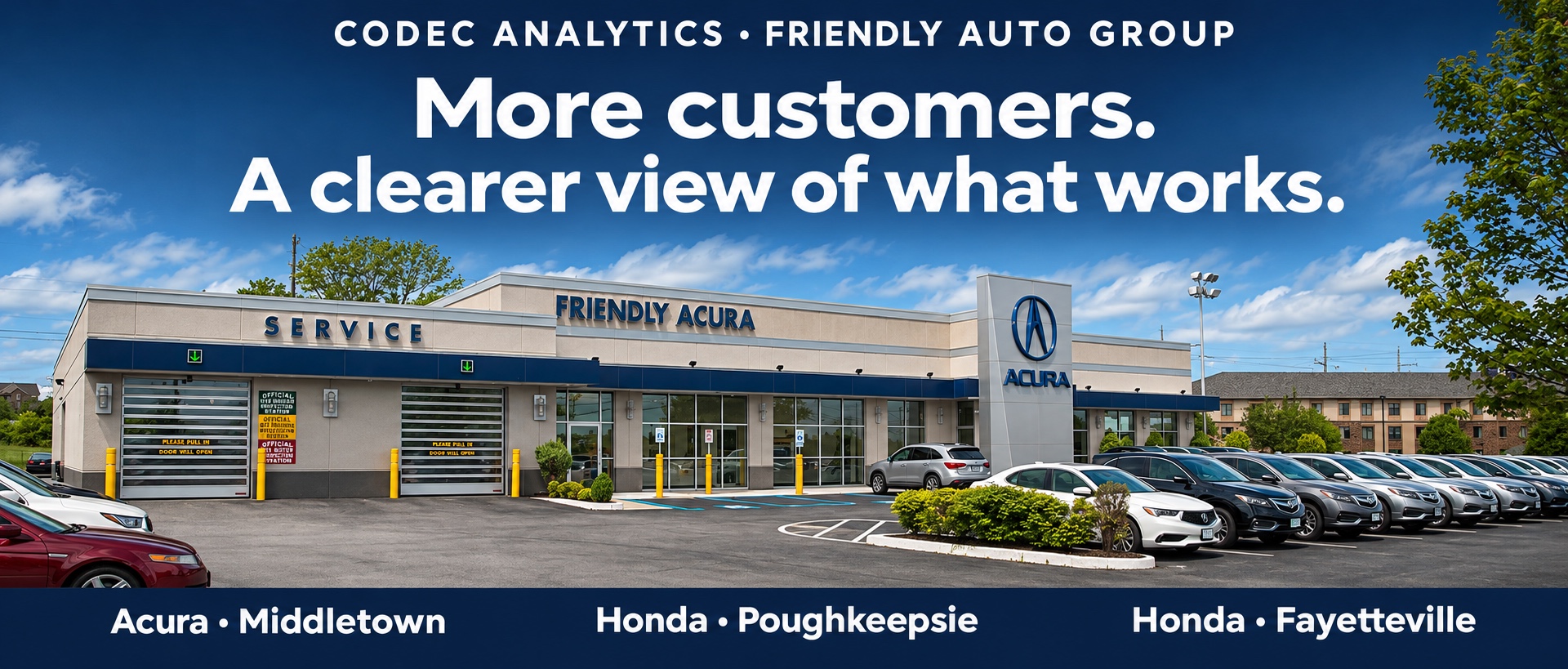
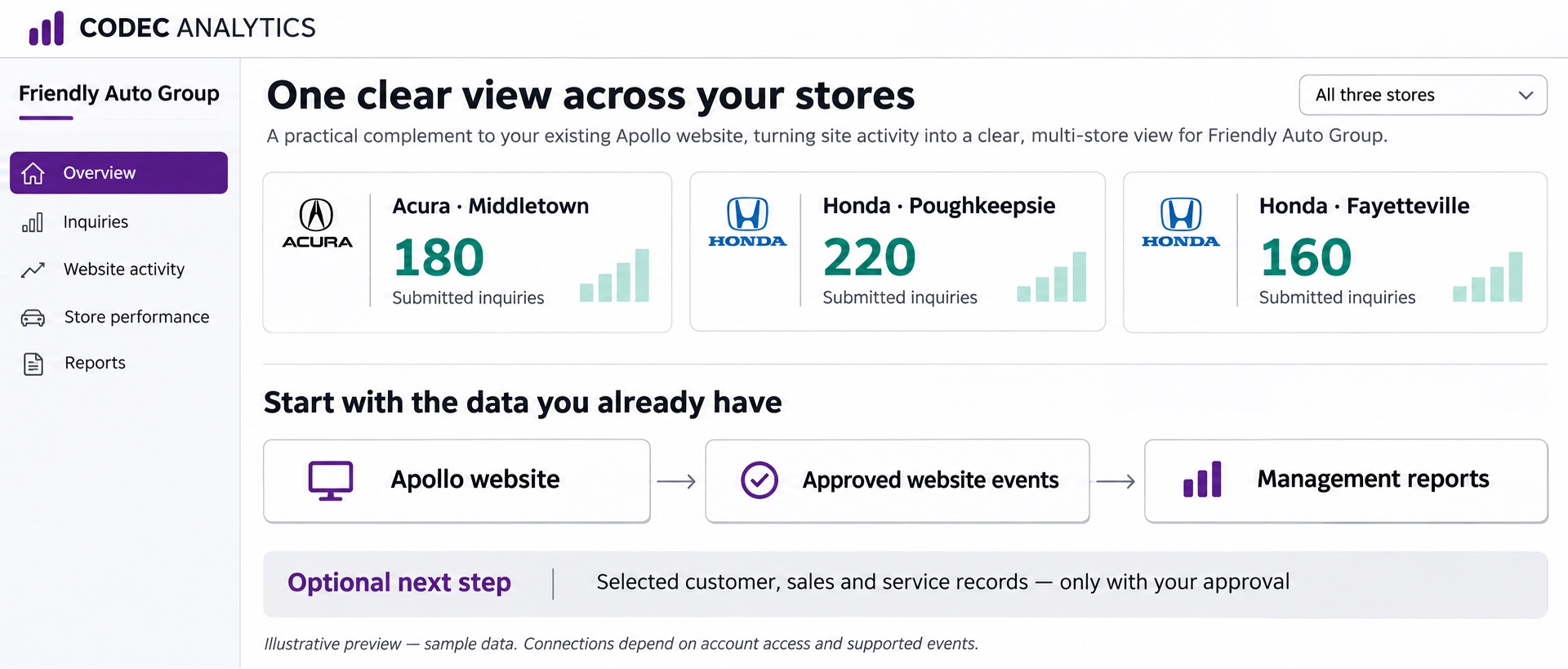
We’ll help your management team see which marketing brings serious shoppers to Acura Middletown, Honda Poughkeepsie, and Honda Fayetteville. Bring website activity and tracked campaigns into clear reports built around your business.
See which offers attract interest, where shoppers stop, and what brings inquiries. Include your own emails, local events, and QR campaigns alongside the channels you already measure.
Start without sharing your customer database. Add approved customer, sales, and service information later if you want deeper answers.
Build useful reports around the Apollo websites you already use. Review existing Google Analytics events, then add CODEC tracking where access allows. Connect campaign visits with vehicle interest, service-offer views, and submitted inquiries. Bring your own event, email, and QR campaigns into the same picture, so management can compare what attracts worthwhile interest across all three stores.
1. KNOW WHAT BRINGS CUSTOMERS — see which tracked ads and campaigns bring vehicle interest, service-offer visits, and submitted inquiries.
2. PUT YOUR BUDGET TO WORK — compare results and move spending toward the channels that bring better opportunities.
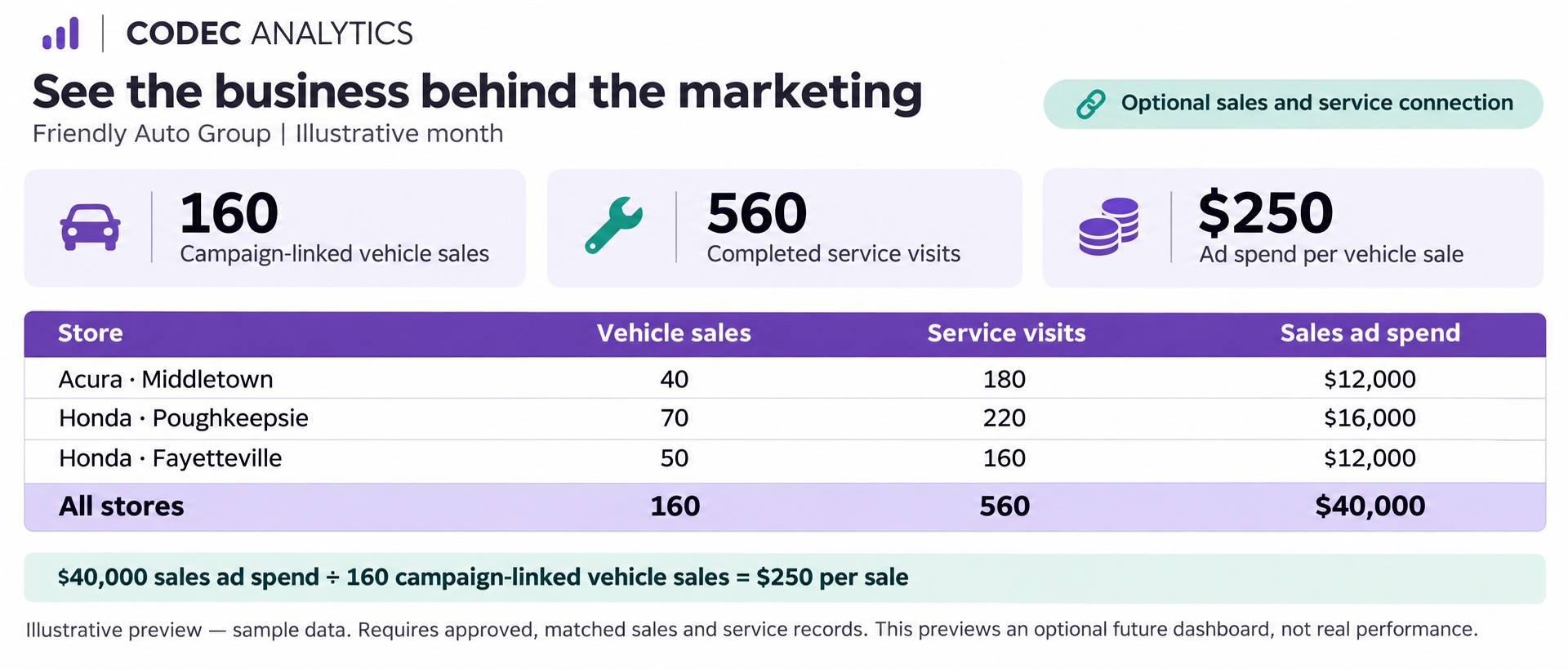
3. SEE THE COST OF EACH RESULT — combine approved ad-cost data with measured inquiries, and add completed outcomes when available.
4. GIVE MANAGEMENT CLEAR ANSWERS — turn available website and campaign data into clear comparisons your management team can use.
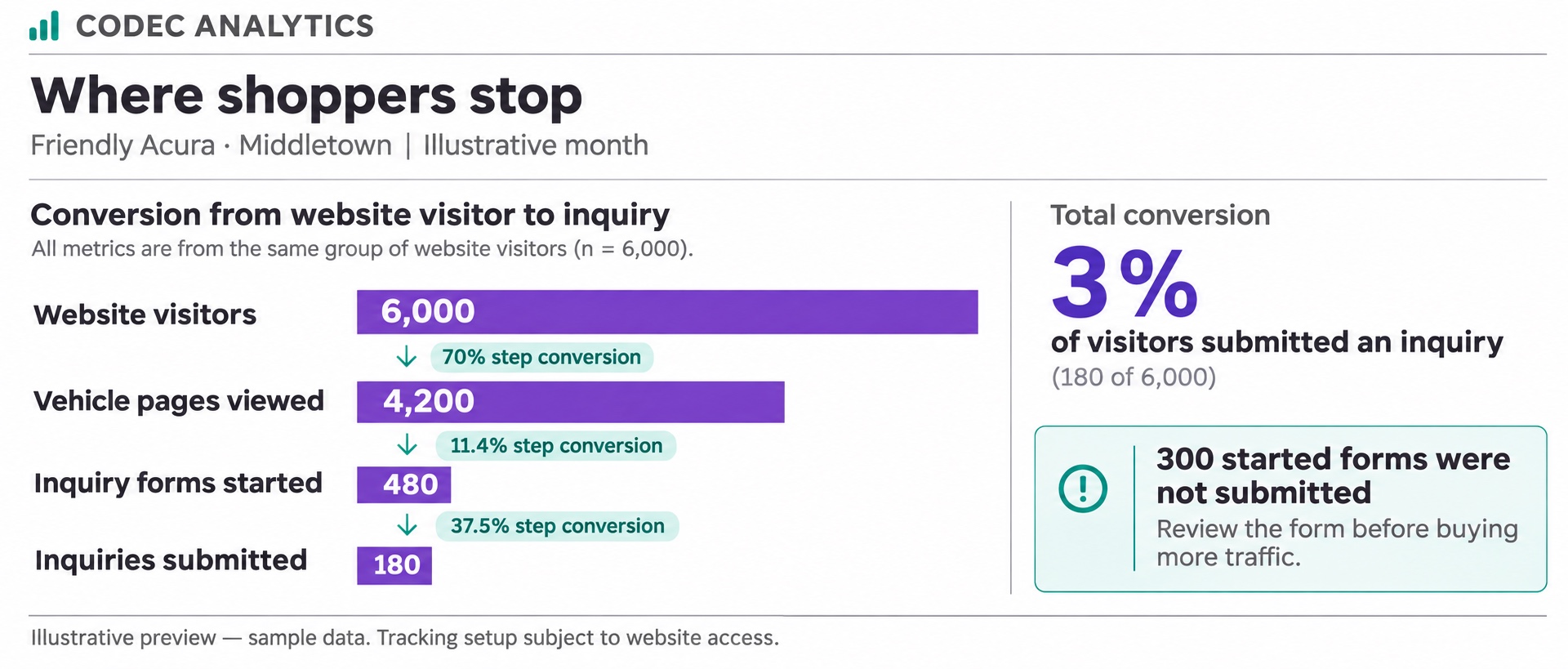
Track the steps shoppers take through vehicle pages, offers, contact forms, trade-in requests, and service scheduling. Show where people keep moving and where they stop. Separate someone opening a form from someone submitting it, and starting a booking from completing one where the booking system supports tracking. Use those differences to focus improvements on the steps losing interested customers.
1. KEEP MORE SHOPPERS MOVING — find the pages and steps that lose interested people before they make contact.
2. MAKE EVERY INQUIRY COUNT — distinguish browsing and button clicks from submitted requests and confirmed appointments.
3. FOCUS IMPROVEMENTS WHERE THEY MATTER — show your website team which forms, offers, and booking steps need attention first.
4. GET MORE FROM EXISTING TRAFFIC — identify opportunities to turn more of the visitors you already attract into conversations and appointments.
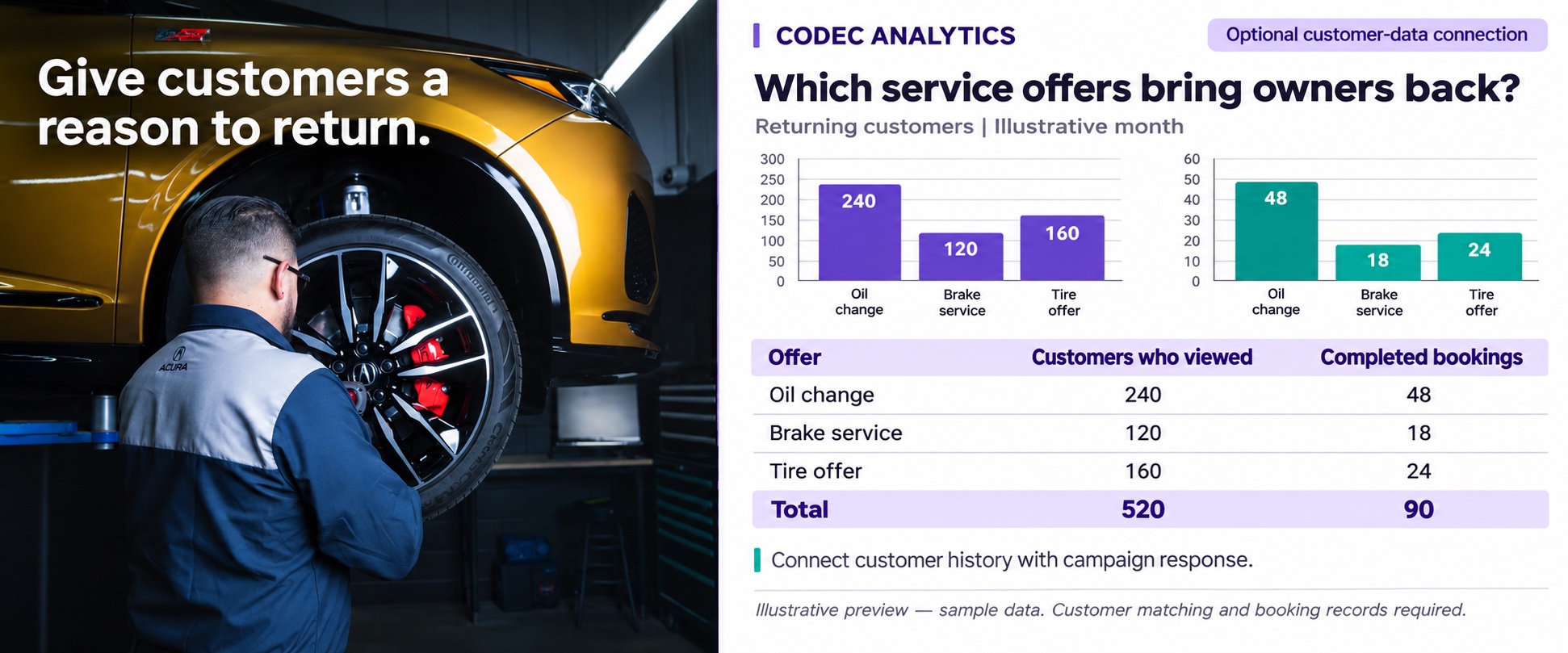
Start by measuring which tracked service messages bring people to your offers and scheduling pages. If you choose to connect selected customer and booking records, compare how previous buyers and service customers respond. Keep those connections in dealership-owned accounts, with access you control. Learn which offers bring owners back without making customer-list access a requirement for getting started.
1. GET MORE FROM CUSTOMER RELATIONSHIPS — measure response to service offers and add customer history through an optional connection.
2. SEND MORE RELEVANT OFFERS — see which service messages attract interest; compare customer groups when selected records are connected.
3. SEE WHAT HAPPENS AFTER THE CLICK — follow tracked campaign visits into offer views and booking steps your systems make available.
4. LEARN WHICH OFFERS EARN REPEAT BUSINESS — connect campaign response with completed service visits when your dealership records are available.
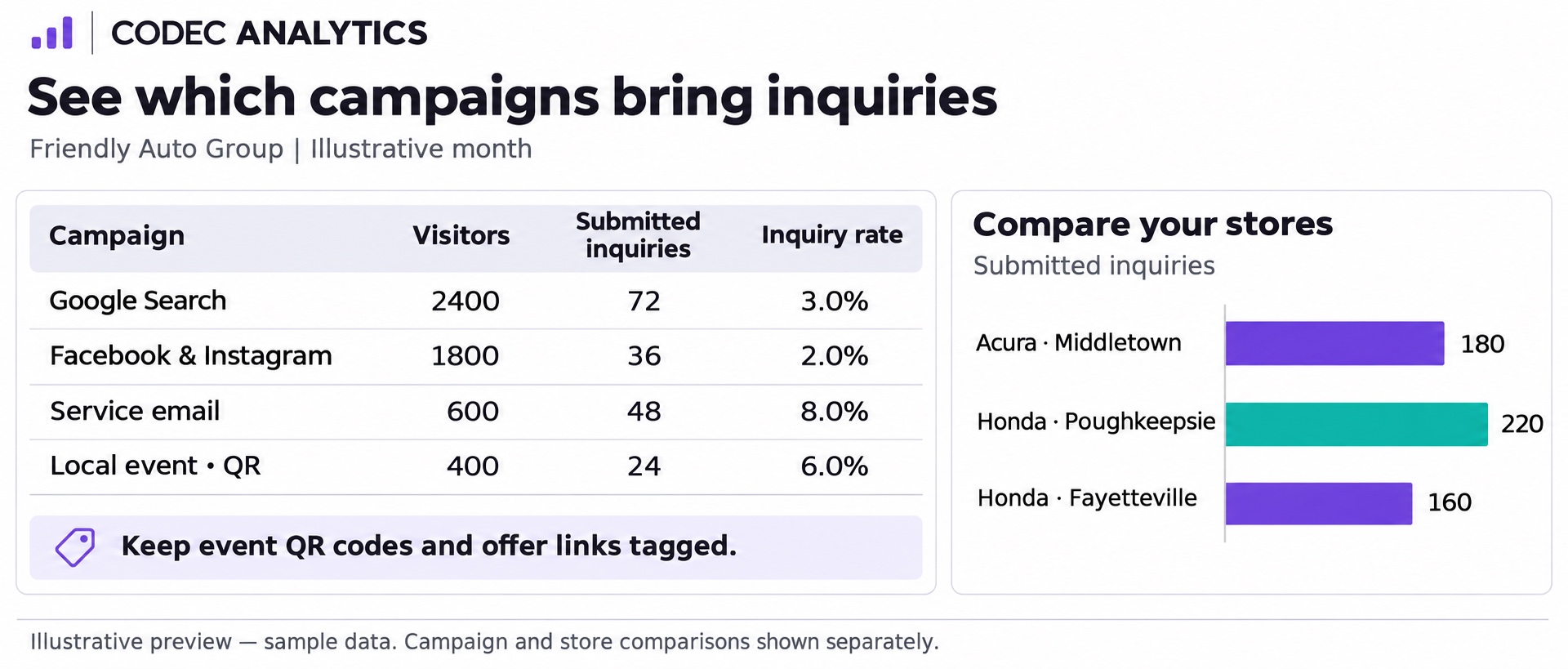
Compare vehicle promotions, service offers, landing pages, and different advertising messages across your three stores. Give emails, ads, and QR codes consistent tracking links, including campaigns your team runs outside Apollo. Use the same definitions at each location so management can see which offers attract useful inquiries and where a successful approach may be worth trying again.
1. FIND THE STRONGER MESSAGE — compare tracked campaigns and offers by the inquiries and appointments they produce.
2. LEARN FROM EACH CAMPAIGN — see which pages and offers deserve another investment and which need a change.
3. MAKE PRINT AND EMAIL MEASURABLE — use tagged links and QR codes to connect campaign visits with website actions.
4. BUILD A CLEARER GROUP VIEW — compare the three locations using consistent measures, while keeping each store’s results clear.
✅ CODEC ANALYTICS SETUP — practical management reports using existing analytics and Mixpanel tracking where approved website access allows.
✅ CAMPAIGN TRACKING — consistent source and campaign information so advertising, email, and tagged links can be compared.
✅ VEHICLE INTEREST — track the inventory pages, models, and offers shoppers explore before they contact your team.
✅ INQUIRY TRACKING — measure submitted forms and test-drive requests, with actual phone-call tracking available when connected.
✅ SERVICE OFFER RESPONSE — see which maintenance and repair offers attract attention and move customers toward scheduling.
✅ BOOKING STEPS — distinguish opening the scheduler, starting a request, and confirmed bookings where the system provides those events.
✅ OPTIONAL CUSTOMER DATA — connect selected records and identified activity if you choose; the core reports do not require your customer list.
✅ OPTIONAL CUSTOMER VIEWS — compare previous buyers and service customers when selected records can be connected and matched.
✅ OPTIONAL SALES AND SERVICE RESULTS — connect approved records where available to measure completed purchases and service visits.
✅ COST PER RESULT — combine campaign spending and recorded outcomes to understand the cost of appointments and customers.
✅ WEBSITE DROP-OFF REPORTS — show the pages, forms, and booking steps where interested visitors stop moving forward.
✅ NEW CAMPAIGN SUPPORT — maintain campaign naming, tagged links, QR destinations, and tracking as new offers are introduced.
✅ THREE STORE REPORTING — compare Acura Middletown, Honda Poughkeepsie, and Honda Fayetteville using the same measures across approved accounts.

✅ KNOW WHICH MARKETING CREATES INTEREST — compare campaign sources, vehicle engagement, service-offer response, and measured inquiries across your stores.
✅ REDUCE WASTED SPENDING — find campaigns that attract attention but produce few worthwhile opportunities, and decide where to make changes.
✅ HELP MORE SHOPPERS TAKE THE NEXT STEP — identify where visitors stop before contacting the dealership or completing a booking.
✅ UNDERSTAND RETURNING CUSTOMERS — measure offer response and add customer history and completed outcomes through optional, approved data connections.
✅ MAKE EACH OFFER MORE USEFUL — compare customer response, page performance, and appointments before deciding which promotion to repeat.
✅ UNDERSTAND THE COST OF RESULTS — connect campaign spend with recorded appointments and customer outcomes to support better budget decisions.
✅ KEEP CONTROL OF YOUR DATA — start without customer-list access and choose any deeper connections, account permissions, and ongoing access.
✅ COMPARE YOUR THREE STORES — give shared management consistent measures for Acura Middletown, Honda Poughkeepsie, and Honda Fayetteville.
• MANAGED TRACKING & MAINTENANCE — routine checks to keep reporting, tags, conversions, and integrations working correctly.
• CAMPAIGN & UTM SUPPORT — tracking for new campaigns, channels, landing pages, ad platforms, QR codes, and local sources as agreed.
• PERFORMANCE & DROP-OFF ANALYSIS — practical review of what is producing opportunities, where leads are lost, and where budget is being wasted.
• REPORTING & STRATEGIC GUIDANCE — understandable performance reviews that connect advertising activity to qualified leads, signed jobs, and revenue where outcome records are connected.
It is possible to later grow it into a marketplace (for Members to sell their goods through the Chamber site) or to the Intranet (a closed social media where members can follow each other, have groups, chat, etc.)